Upper Arlington, Ohio
A standing relationship for your trees — not a transaction. Four seasonal visits, an annual written health summary with photos, and annual soil lab analysis.
Text David for Details →A pest takes hold before you notice a leaf. A branch loses its attachment slowly, over winters. A root zone compacts, and the canopy thins a little every summer until suddenly it's a lot.
The tree service model is reactive — you call when something's already a problem. By then the work is bigger, more expensive, and more final than it needed to be. I built the Tree Steward Program to flip that. I come look when things are quiet. Small catches, early.
You get someone who knows your trees. I get a route worth driving.
Three shorts from a recent visit back to the family farm in Central Pennsylvania. I learned the orchard rhythm here — why we walk the trees every night, especially in organic farming. I live in Upper Arlington now. That rhythm is what I brought home.
A hundred-tree apple orchard in Pennsylvania. A hundred acres of old-growth forest on the Olympic Peninsula. Both taught me the same thing in different languages: trees reward attention, and they punish inattention on a schedule you can't see until the schedule is up.
The orchard was on a rhythm. Scouting for borers in spring, thinning in summer, pruning in winter. Not because someone called — because the calendar said so. When I came home to Upper Arlington, I couldn't un-see that rhythm. The mature canopy here is the same covenant as an orchard, simply more scattered. It needs the same visits. It just needs someone whose job is to make them.
That's all the Tree Steward Program is. A rhythm. On your trees.
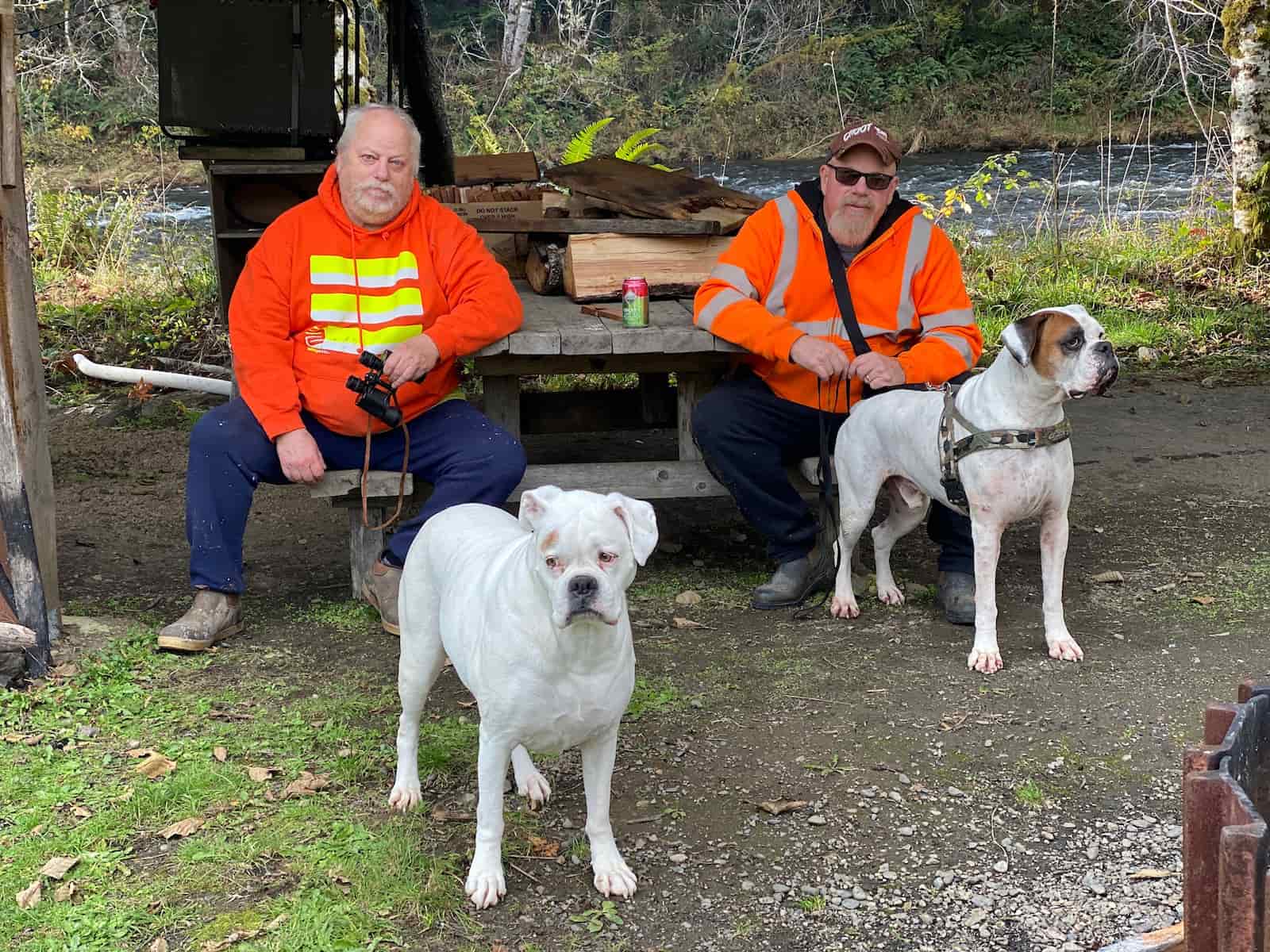
Dave and Jimmy Hahn — two brothers, Olympic Peninsula, Washington — taught me how to manage 100 acres of old-growth forest. How to keep the chain sharp. Why footwork matters in tree work.
And why stewardship in service to a natal creek with one of the last wild coho runs counts more than any certification, credential, or published-author tag.
That's the lesson I bring to Tree Steward properties in Upper Arlington. Smaller scale. Different trees. Same patience.
No sprays. Fingers, a careful eye, and knowing the difference between a bud, a ladybug, and a scale insect quietly sucking the tree dry and about to hatch its next generation. The saddest thing about this work is walking past a tree and seeing the scale gorging — without the authority to do anything about it. On Tree Steward properties I have that authority. Three saves this spring across peach, apple, and magnolia.
Competing leaders. Codominant stems with bark inclusion. The textbook setup for a structural failure twenty years from now, when the tree is full-sized and the limb finally lets go. The intervention today: me on a ladder, Japanese steel strapped to my leg, one precise cut at the exact collar and angle. The intervention later: a crew in the bucket truck pulling the limb off your roof while you call your insurance and try to prove you weren't negligent. Same tree. Same problem. Very different invoice.
More UA tree decline traces back to mowers, mulch, and planting depth than to anything an insect ever did. The mower hits the trunk one too many times — bark stripped, cambium exposed, decay invited in. The landscaper piles a six-inch mulch volcano against the trunk, smothering the root flare and rotting the bark right where it needs air. A replacement tree goes in with its root flare buried four inches below grade — a slow strangulation nobody notices until year five, when the canopy thins and you wonder why. None of this has to happen. All of it does.
The work doesn't disappear into a paper invoice. Open your portal and every tree on your property is numbered and mapped — species, condition, and the photos from each visit. Underneath sits the part most homeowners have never had: my observations, season to season. What I saw in spring. What changed by fall. The cut I made and why. The pest I'm watching before it becomes a problem.
It's the way a doctor keeps a chart, or an orchardist keeps a tree-by-tree log. You stop guessing about your canopy and start knowing it.
A chart per tree
Species, condition, location, and full history — not a whole property lumped into one line.
Photos every visit
Before and after, so you see the work — not just the invoice.
Seasonal observations
What changed since last time, in my words. The quiet problems caught early.
Recommendations
What I'd do next, and why. Act on it or don't — your call, no pressure.
Soil & lab results
Your annual soil analysis lives here too — pH, texture, what to amend.
Yours to keep
The record belongs to the tree. It stays with your property, even if you sell.
I'm an arborist who also writes software — I built ArbKeep for my own practice. Every client gets their own login, free, from the first visit. The Tree Steward program keeps the chart growing, season after season.
Already a client? Log in to your portal →Text me. I'll call or text back same day, walk your yard, and we'll see if it's a fit. No pressure.
Text David: (614) 312-2979 →Upper Arlington, Ohio · $397/year